
Strength Training Without the Weight Room
Bodyweight exercises for strength have a reputation for being simple, almost too simple. No machines, no plates, no complicated setup. Just your own body, a bit of space, and enough willingness to keep showing up. But anyone who has tried a slow push-up, a deep squat hold, or a strict pull-up knows the truth pretty quickly. Bodyweight training can be humbling.
The beauty of this style of exercise is that it meets you where you are. A beginner can start with wall push-ups and chair squats. A more advanced trainee can work toward pistol squats, handstand push-ups, pull-ups, and explosive movements. The same basic patterns can grow with you for years.
Strength is not only about how much weight you can lift. It is also about how well you control your body, how stable your joints feel, how confidently you move, and how much useful power you can create in everyday life. Bodyweight training builds that kind of strength in a very honest way.
Why Bodyweight Training Works
Muscles grow stronger when they are challenged. That challenge can come from a barbell, a dumbbell, a cable machine, or your own body. The body does not care much about the tool. It responds to tension, effort, control, and consistency.
Bodyweight exercises work especially well because they train several muscles at once. A push-up does not only train the chest. It also asks the shoulders, triceps, core, glutes, and even the legs to stay active. A squat is not just a leg exercise. It teaches balance, hip movement, ankle mobility, and posture. A plank looks quiet from the outside, but it can teach the whole midsection how to brace and stay steady.
This is one reason bodyweight strength feels practical. The movements often resemble real-life actions: pushing, pulling, bending, sitting, standing, climbing, reaching, and stabilizing. You are not just building muscle for appearance. You are teaching your body to move better.
The Foundation Starts With Control
Good bodyweight training begins with control, not speed. It is tempting to rush through reps because there is no heavy weight in your hands. But fast, sloppy movement often removes the very tension that makes the exercise useful.
A controlled push-up, lowered slowly and pressed back up with a steady body line, is far more valuable than a set of rushed half-reps. A squat that reaches a comfortable depth with balanced feet and an upright chest builds better strength than bouncing through the movement just to finish quickly.
Control also protects the joints. When you move with attention, you notice where the body feels stable and where it feels weak. Maybe your knees cave in during squats. Maybe your lower back dips during planks. Maybe one shoulder feels less steady than the other. These small signals are useful. They show you what needs work before discomfort becomes a bigger problem.
Push Exercises for Upper-Body Strength
Push exercises are the backbone of upper-body bodyweight training. The classic push-up is still one of the most effective movements because it can be adjusted for almost any level. Beginners can start with hands elevated on a bench, table, or wall. As strength improves, floor push-ups, decline push-ups, diamond push-ups, and slow-tempo push-ups can make the exercise more demanding.
The key is to keep the body aligned. The hips should not sag, and the shoulders should not shrug toward the ears. Think of the body as one strong line from head to heels. Lower with patience, press through the floor, and keep breathing.
Dips can also build strong triceps, shoulders, and chest, though they should be approached carefully. Some people feel great doing dips, while others feel strain in the front of the shoulder. If the movement feels sharp or uncomfortable, it is better to choose another push variation. Strength training should challenge you, not punish your joints.
Pulling Strength and the Missing Piece
Pulling movements are often the hardest part of bodyweight training because they usually require something to hold onto. Pull-ups, chin-ups, and inverted rows are powerful exercises for the back, biceps, and grip. They also help balance all the pushing many people do in workouts and daily life.
A full pull-up is a serious strength skill. Many beginners cannot do one at first, and that is completely normal. Inverted rows under a sturdy bar, assisted pull-ups, slow negative pull-ups, and dead hangs can help build the necessary strength over time.
Pulling work matters for posture too. A strong back supports the shoulders and helps counter the rounded position many people develop from sitting, typing, and looking down at screens. If push-ups build the front of the upper body, rows and pull-ups build the structure behind it.
Lower-Body Strength With Squats and Lunges
Bodyweight leg training can be much harder than people expect. Squats, lunges, split squats, step-ups, glute bridges, calf raises, and wall sits all build lower-body strength when performed with care.
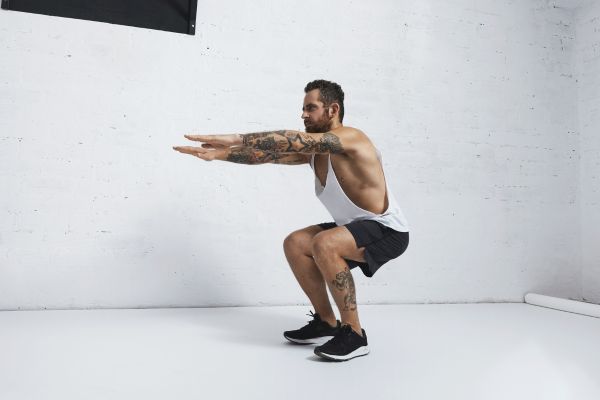
The bodyweight squat is a starting point, but it should not be treated as “easy” by default. A slow squat with a pause at the bottom can light up the legs quickly. Lunges and split squats add a single-leg challenge, forcing the hips, knees, ankles, and core to stabilize. This is useful because life rarely happens with both feet perfectly planted.
For advanced trainees, single-leg progressions can be very effective. Pistol squats, shrimp squats, and slow step-downs demand strength, mobility, and balance. They should be built gradually. There is no need to rush into the hardest version just because it looks impressive. The best exercise is the one you can perform well enough to benefit from it.
Core Strength Beyond Crunches
A strong core is not only about visible abs. It is about stability. The core helps transfer force between the upper and lower body, protects the spine during movement, and supports posture. Bodyweight training offers plenty of ways to strengthen it without endless crunches.
Planks, side planks, hollow holds, mountain climbers, dead bugs, and slow leg raises all train the midsection in different ways. The goal is to resist unwanted movement, maintain control, and breathe under tension.
A good plank should feel active. The glutes are lightly squeezed, the ribs are controlled, and the body forms a steady line. If the lower back starts to sag, the set has probably gone too long. Quality matters more than holding a position for a dramatic amount of time.
Making Bodyweight Exercises Harder
To keep gaining strength, bodyweight exercises need progression. Since you are not simply adding plates to a bar, progression comes from changing leverage, tempo, range of motion, reps, sets, pauses, or exercise difficulty.
A push-up becomes harder when the feet are elevated, the lowering phase is slowed, or the hands are placed closer together. A squat becomes harder with pauses, single-leg variations, or slower reps. A plank becomes harder when you lift one arm, one leg, or extend the body into a longer position.
This is where bodyweight training becomes creative. Small adjustments can make a familiar movement feel new again. The trick is to progress gradually enough that form stays clean. If a harder variation makes the movement messy, it is usually better to spend more time mastering the previous step.
Recovery Still Matters
Because bodyweight training feels accessible, people sometimes do too much too soon. They think, “It is only bodyweight,” and then wonder why their wrists, shoulders, knees, or hips feel irritated. The body still needs time to recover.
Strength improves between workouts, not only during them. Muscles repair, joints adapt, and the nervous system becomes better at coordinating movement. Rest days, sleep, hydration, and enough food all support progress.
A simple routine done three or four times per week can be enough for many people. Some may prefer shorter daily sessions, but intensity should be managed. Hard push-up and squat variations every single day can catch up with you. Better to train with patience than to stop because everything aches.
Staying Consistent With a Simple Routine
The most effective bodyweight plan is one you can repeat. It should include pushing, pulling, squatting or lunging, hip-focused work, and core training. It does not need to be fancy. A few well-chosen exercises performed consistently can create meaningful strength over time.
Progress should be measured in small signs. More controlled reps. Better depth. Longer holds. Stronger posture. A first full push-up. A first pull-up. Less shaking in a plank. These improvements may not always look dramatic, but they are real.
Bodyweight exercises for strength are especially helpful because they remove common excuses. You do not need a perfect gym, perfect equipment, or perfect schedule. You need a bit of space and a plan you are willing to follow.
Conclusion
Bodyweight exercises for strength prove that fitness does not have to be complicated to be effective. With push-ups, squats, lunges, rows, planks, bridges, and steady progressions, you can build a body that is stronger, more stable, and more capable in everyday life.
The real value of bodyweight training is its honesty. It shows you how well you move, where you need control, and how much strength you can build through patience. Start with the version you can do well, improve it slowly, and let consistency do its quiet work. Over time, your own body becomes the training tool that teaches you the most.